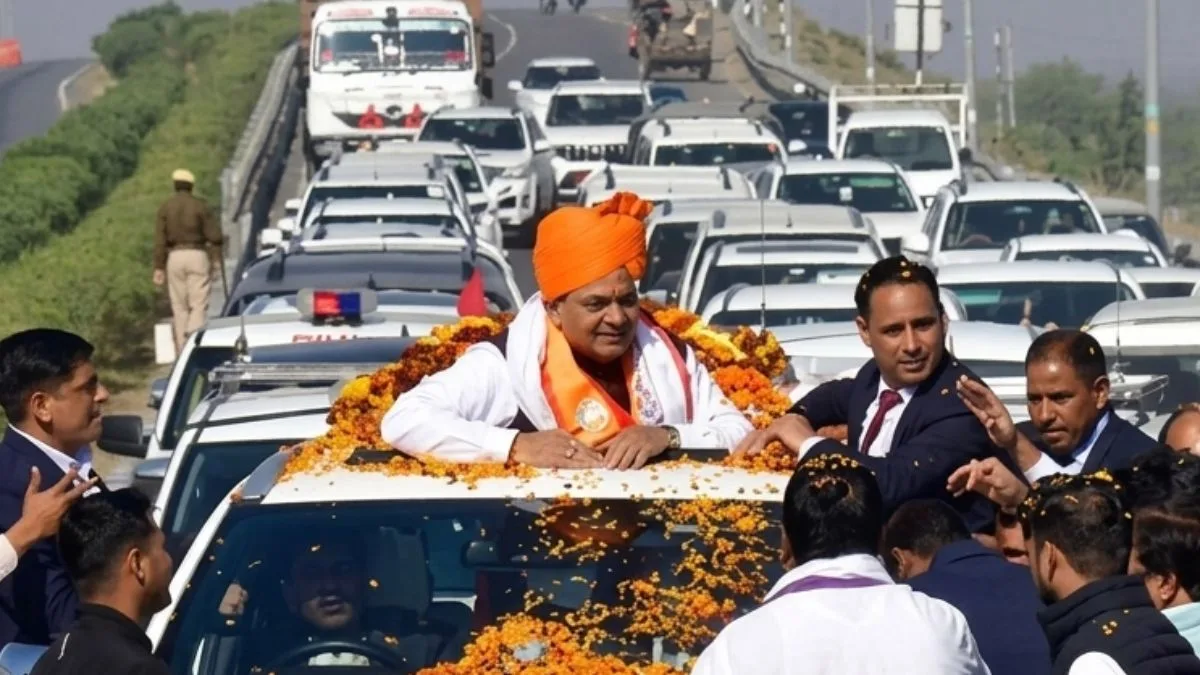
Rajasthan Chief Minister Bhajan Lal Sharma issued a set of firm directives on Tuesday aimed at cutting down government fuel consumption, ordering that his own official convoy be kept to the bare minimum. Sharma specifically directed that unnecessary vehicles should not be added to his convoy under the garb of security arrangements, and instructed all state officials and public representatives to exercise restraint in vehicle usage, ensuring that convoys remain limited and economical.
The directive was not for the Chief Minister’s office alone. They sent it to all senior officials and elected representatives across the state, including Chief Secretary V. Srinivas and other top administrative officers.
Advertisement
What triggered the move
The Rajasthan government’s action comes directly in the wake of Prime Minister Narendra Modi’s appeal to the nation for fuel conservation. Modi called for a reduction in petrol and diesel consumption, promoted the use of metro rail and public transport, encouraged car-pooling, and pushed for the use of railways for freight movement, along with the wider adoption of electric vehicles.
The Prime Minister made this appeal against the backdrop of a serious global energy crunch. Global fuel costs have surged, Modi said in a public address in the southern city of Hyderabad, appealing to Indians to use public transport, work from home, and carpool to conserve fuel.
Amid elevated global crude oil prices and energy crisis triggered by the US-Iran war, Modi called for collective participation to help country withstand global economic uncertainties, supply chain disruptions, inflationary pressures.
India’s import dependence
The Prime Minister’s concern comes from hard economic realities. India imports nearly 85% of its fuel needs and relies on the Strait of Hormuz for about 50% of its crude imports, 60% of its liquefied natural gas, and almost all of its liquefied petroleum gas supplies.
India spent $174.9 billion on crude and petroleum products. That amounts to 22% of its total imports in the financial year ended March 2026, a figure that becomes even more alarming when oil prices spike due to geopolitical conflict. Higher energy costs are likely to significantly widen the country’s trade deficit and current account deficit, while the rupee has come under strain and is trading near an all-time low against the dollar.
Modi’s broader conservation push
Fuel was not the only concern that Modi raised.
The Prime Minister also urged citizens to avoid non-essential gold purchases for one year to reduce pressure on foreign exchange outflows, and advised against foreign travel and destination weddings abroad, calling the conservation of foreign exchange reserves an act of patriotism. He pitched hard for domestic tourism instead.